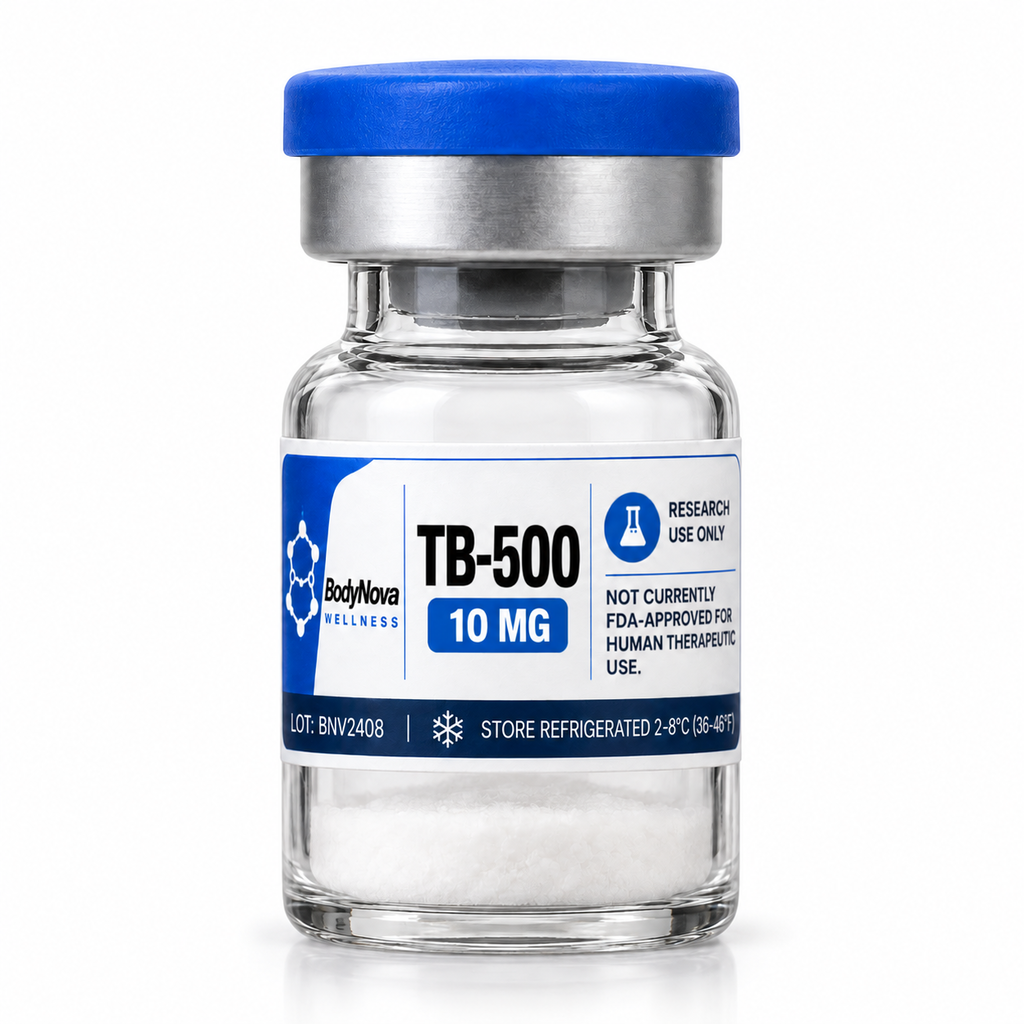
TB-500
Not for human consumption
TB-500
A thymosin beta-4 fragment studied in tissue-repair and cell-migration research.
$30 USD per vial
Also known as: TB-500, Thymosin Beta-4 fragment, TB4
Overview
TB-500 is a synthetic fragment related to thymosin beta-4, corresponding to its actin-binding domain. It is studied mainly in laboratory and animal models of cell migration, wound healing, tissue and muscle repair, tendon and ligament recovery, and the processes involved in blood-vessel formation (angiogenesis) and tissue remodeling. Its human clinical evidence is very limited, and the available findings remain preclinical. It is offered here for research use only.
Research highlights
- Thymosin β4 and a seven-residue actin-binding peptide were examined in dermal wound models in diabetic and aged mice.1Animal
- TB-500 itself was examined in a 2026 rat Achilles tendon repair study with biomechanical and histological measures, alone and with BPC-157.2Animal
- Thymosin β4 rose in plasma during exercise in people; in mice it was reported not to ameliorate metabolic disruption or enhance muscle regeneration.3Human
- Studied in mouse muscle regeneration, where thymosin β4 expression rose after injury, and in myoblast cultures for chemotaxis.4Animal
- Investigated in endothelial cell cultures for migration and tube formation, including mutants lacking Ac-SDKP or the actin-binding sequence.5Cell
- Human data concern thymosin β4, not TB-500: a Phase II dry-eye trial missed its primary endpoints but differed on some secondary ones.6Human
How it works in research
TB-500 is variously described in the literature as a synthetic peptide related to thymosin β4 (Tβ4), a protein that binds actin. Most of the research cited here was done on thymosin β4 itself and on related fragments rather than on TB-500, apart from one 2026 rat study that examined TB-500 by name. Laboratory and animal work reports effects on cell migration, including endothelial migration, tube formation and myoblast chemotaxis, with the actin-binding sequence and the N-terminal Ac-SDKP tetrapeptide examined as possible contributors. These mechanisms come from animal and cell work, and their relevance to TB-500 in humans has not been established.
Published research
- Discovery of thymosin β4 as a human exerkine and growth factor. (PubMed, opens in a new tab)Am J Physiol Cell Physiol, 2021Human
This product is sold for laboratory research use only and is not approved for human use.
Research summary updated Oct 2026