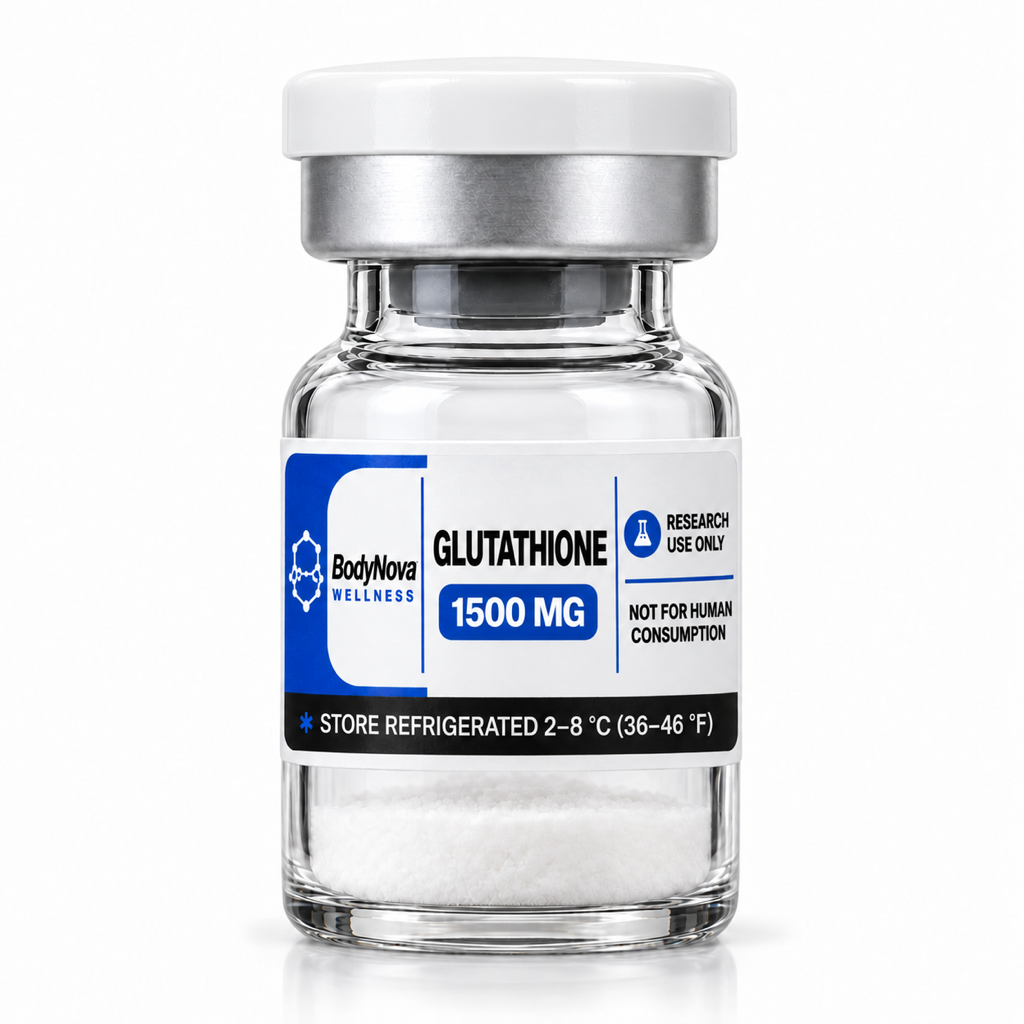
Glutathione
Not for human consumption
Glutathione
An antioxidant tripeptide studied in oxidative-stress research.
$75 USD per vial
Also known as: Glutathione, GSH, Reduced glutathione
Overview
Glutathione is an endogenous antioxidant tripeptide investigated for its role in oxidative-stress and cellular-defense research. It is offered here for research use only.
Research highlights
- In rats, added glutathione was reported to reach tissues poorly, while induced glutathione deficiency was linked to lower endurance and more oxidative stress.1Animal
- In mouse fibroblasts engineered to express GGT, extracellular glutathione was studied as a source of cysteine for growth and intracellular glutathione.2Cell
- A randomized, placebo-controlled trial in 54 healthy adults measured glutathione in blood, plasma, erythrocytes, lymphocytes and cheek cells.3Human
- Another placebo-controlled trial in 40 healthy adults reported no significant change in urinary oxidative-stress biomarkers or red-cell glutathione.4Human
- In a placebo-controlled trial in 124 women, L-cystine and reduced glutathione, alone and combined, were examined for skin color and facial dark-spot size.5Human
How it works in research
Glutathione (GSH) is described in the literature as an endogenous tripeptide of glutamate, cysteine and glycine that works as a major cellular antioxidant and takes part in cellular detoxification. Laboratory work has examined added glutathione in rats and in cultured fibroblasts, where extracellular glutathione has been studied as a source of cysteine, alongside experimentally induced glutathione deficiency and its effect on exercise-related oxidative stress. Human trials have measured glutathione in blood, oxidative-stress biomarkers and skin pigmentation, with mixed results, and how well added glutathione reaches tissues remains an open question in the literature.
Published research
- Exercise-induced oxidative stress: glutathione supplementation and deficiency. (PubMed, opens in a new tab)J Appl Physiol (1985), 1994Animal
- Effects of oral glutathione supplementation on systemic oxidative stress biomarkers in human volunteers. (PubMed, opens in a new tab)J Altern Complement Med, 2011Human
This product is sold for laboratory research use only and is not approved for human use.
Research summary updated Oct 2026