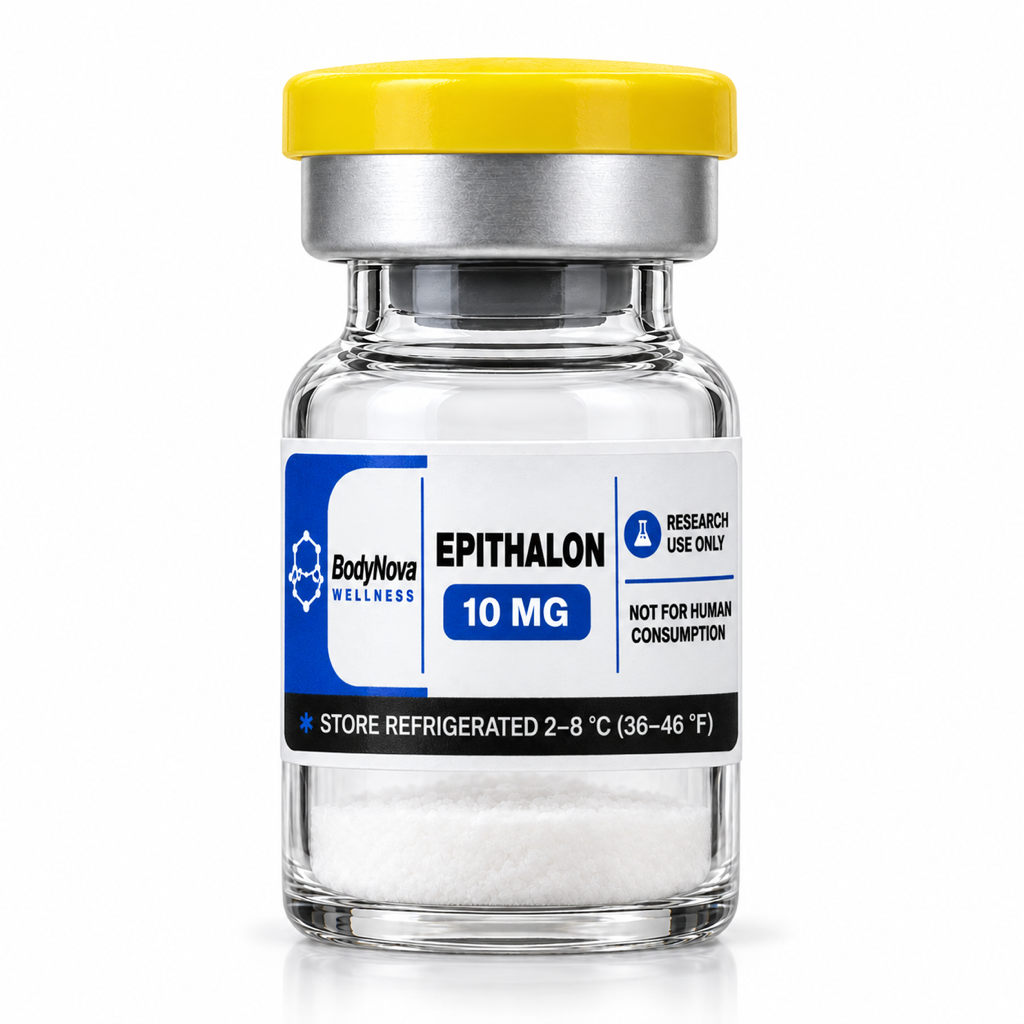
Epithalon
Not for human consumption
Epithalon
A tetrapeptide studied in telomere and cellular-aging research.
$40 USD per vial
Also known as: Epithalon, Epitalon, Epithalone
Overview
Epithalon is a synthetic tetrapeptide (Ala-Glu-Asp-Gly) described in the literature as based on epithalamin, a pineal-gland extract. It is investigated for its role in telomerase activity and telomere length in cultured cells, in models of cellular aging, and in circadian-rhythm and melatonin research. Much of the published work comes from a small number of research groups and from laboratory and animal models, and controlled human data are limited. It is offered here for research use only.
Research highlights
- Studied in telomerase-negative human fetal fibroblasts, where telomerase expression and activity and telomere elongation were reported.1Cell
- A 2025 study in normal and breast cancer cell lines reported longer telomeres via telomerase in normal cells and ALT activation in cancer cells.2Cell
- Followed in female mice for life: mean lifespan and body weight were unchanged, while estrous function, chromosome aberrations and maximum lifespan differed.3Animal
- Followed in female rats under standard, natural and constant light for lifespan and spontaneous tumors; the reported effects differed by light regime.4Animal
- Examined in female rhesus monkeys of different ages for evening melatonin and circadian cortisol rhythms, with effects reported in the old animals.5Animal
How it works in research
Epithalon (also written Epitalon) is described in the literature as a synthetic tetrapeptide (Ala-Glu-Asp-Gly) based on epithalamin, a pineal-gland extract. In cultured human cells it has been studied for effects on telomerase expression and telomere length, including a 2025 study from a different group that also reported telomere extension through an alternative, telomerase-independent mechanism in cancer cell lines. Animal work has examined lifespan, tumor development and age-related measures in mice and in rats under different light regimes, and a study in aged monkeys has looked at melatonin and cortisol rhythms. Much of the literature comes from a small number of research groups and dates from the early 2000s, and the cited studies are limited to cultured cells and animals; no human trial is cited.
Published research
- Regulatory effect of Epithalon on production of melatonin and cortisol in old monkeys. (PubMed, opens in a new tab)Bull Exp Biol Med, 2001Animal
This product is sold for laboratory research use only and is not approved for human use.
Research summary updated Oct 2026
Related peptides
- BodyNovaWellness
NAD+
500 MGResearch use only
Not for human consumptionSTORE REFRIGERATED 2–8 °C (36–46 °F)$45 USD per vial
A cellular coenzyme studied in energy-metabolism and cellular-aging research.
- BodyNovaWellness
SS-31
10 MGResearch use only
Not for human consumptionSTORE REFRIGERATED 2–8 °C (36–46 °F)$45 USD per vial
A mitochondria-targeted peptide studied in cellular-energy research.