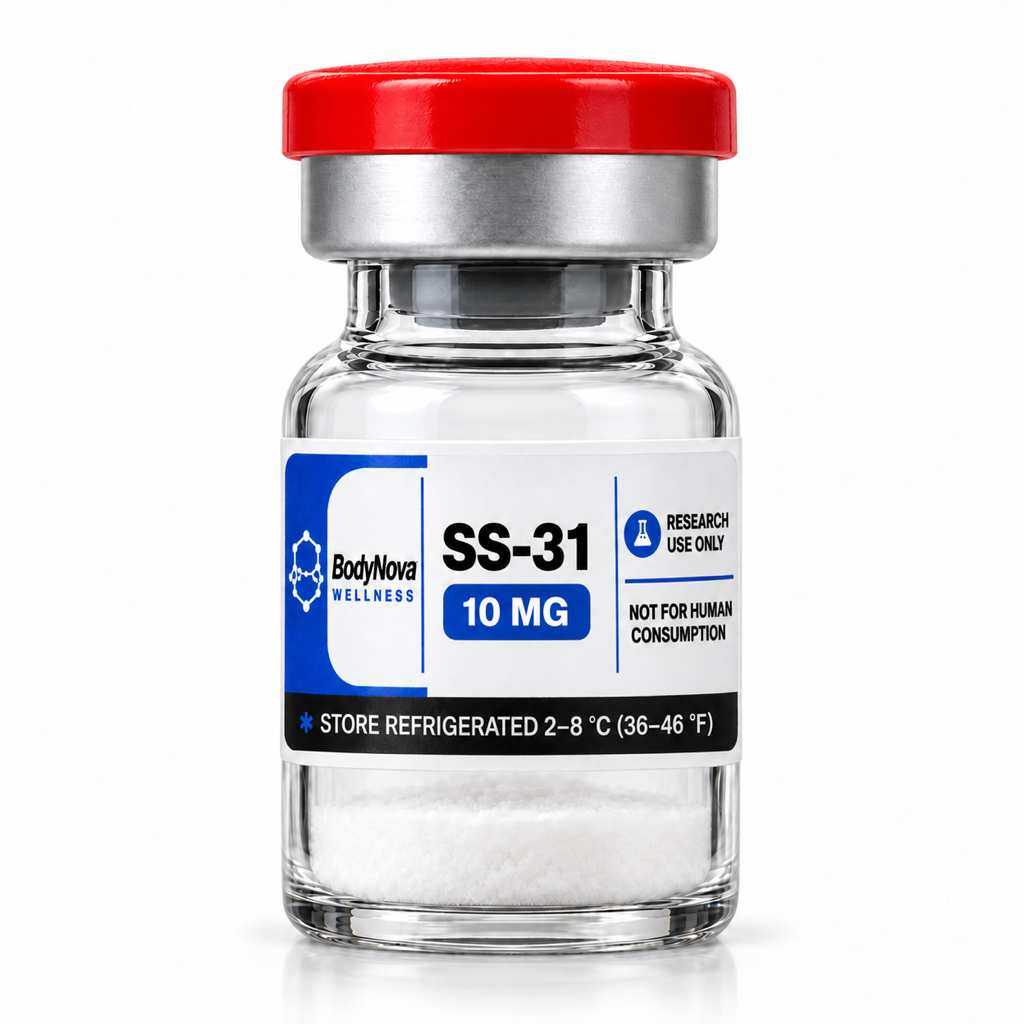
SS-31
Not for human consumption
SS-31
A mitochondria-targeted peptide studied in cellular-energy research.
$45 USD per vial
Also known as: SS-31, Elamipretide, MTP-131
Overview
SS-31 is a mitochondria-targeted peptide investigated for its role in mitochondrial function and cellular-energy research. It is offered here for research use only.
Research highlights
- Studied in rat cardiac ischemia-reperfusion for mitochondrial respiration and cristae structure, with cardiolipin binding examined in model membranes.1Animal
- Explored in INS1 β-cells for mitophagosome formation and mitochondrial fragmentation under nutrient excess.2Cell
- Investigated in aged female mice for muscle protein phosphorylation: age-related differences were partly reversed and did not track S-glutathionylation.3Animal
- Studied in kidney-cell and mouse models of acute kidney injury, where phospholipid scramblase 3 was reported as needed for the effects observed.4Animal
- Investigated in a randomized, placebo-controlled crossover trial of adults with primary mitochondrial myopathy for walking distance and fatigue measures.5Human
- Examined in a phase 3 randomized trial of adults with primary mitochondrial myopathy; the primary end points, walking distance and fatigue, were not met.6Human
How it works in research
SS-31, published in the literature as elamipretide and MTP-131, is described as a synthetic tetrapeptide that targets mitochondrial membranes and binds cardiolipin. In rat and mouse studies it has been examined for effects on cristae structure and respiration in the heart and on protein phosphorylation in aged skeletal muscle, and in cells for mitochondrial quality control, including mitophagy. Phospholipid scramblase 3 has been proposed as a molecular target in kidney-cell and mouse models. Randomized trials in adults with primary mitochondrial myopathy did not reach statistical significance on their primary end points.
Published research
- A randomized crossover trial of elamipretide in adults with primary mitochondrial myopathy. (PubMed, opens in a new tab)J Cachexia Sarcopenia Muscle, 2020Human
This product is sold for laboratory research use only and is not approved for human use.
Research summary updated Oct 2026
Related peptides
- BodyNovaWellness
NAD+
500 MGResearch use only
Not for human consumptionSTORE REFRIGERATED 2–8 °C (36–46 °F)$45 USD per vial
A cellular coenzyme studied in energy-metabolism and cellular-aging research.
- BodyNovaWellness
Epithalon
10 MGResearch use only
Not for human consumptionSTORE REFRIGERATED 2–8 °C (36–46 °F)$40 USD per vial
A tetrapeptide studied in telomere and cellular-aging research.